

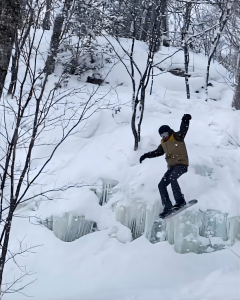
Winter sports are a popular way to stay active, but hitting the slopes without preparation can quickly turn a thrilling day into a painful one. Whether you’re a beginner or a pro, safety should come first. Bone & Joint Sports Medicine Specialist Dr. Lawton (shown snowboarding in the photo) shares practical tips to keep you safe while enjoying the snow.
Common Skiing Injuries
Skiing puts heavy demands on your body. According to Dr. Lawton, knee, shoulder and head injuries are most common—especially knee ligament sprains and tears. Beginners have a 2.5 times higher injury risk, but you can reduce this with solid preparation.
Prevention Tips:
Build leg and core strength before ski season with squats, lunges and core exercises. Make sure your boots fit snugly, and bindings are expertly adjusted to release if you fall. Always get your gear checked by a ski technician before your first run.
The Importance of a Warm-Up
Cold muscles are more prone to injury. Warming up increases muscle temperature and reaction speed. Complete this routine within 15 minutes of skiing, but don’t overdo it:
- Get moving: Jogging in place or jumping jacks.
- Stretch: Slow, controlled knee and hip stretches.
- Activate muscles: Bodyweight squats and lunges.
- Balance: Single-leg squats or small side-to-side hops.
Must-Have Ski Gear
Your helmet is your most important piece of gear. Everyone should wear one, no matter your skill. Helmets greatly reduce the risk of severe head injuries. For extra protection, look for helmets with a slip liner like MIPS, WaveCel or SPIN.
Recognizing Overuse and Strain
Listen to your body. Early signs of overuse include pain after skiing, poor control or feeling limited. Don’t keep skiing if you’re in pain or fatigued. This raises your injury risk. Stop if you feel any limits in movement or discomfort during activity.
Staying Warm While Staying Safe
A three-layer system is best for warmth and mobility:
- Inner: Moisture-wicking base layer.
- Middle: Fleece, wool or light down for insulation.
- Outer: Windproof, waterproof shell with vents.
Don’t overdress—dress for activity, not how you feel standing still. Layer lightly and add more if you get cold, rather than risking overheating and sweat.
Keep Safety First
Preparation makes the difference between a memory-filled ski season and a painful recovery. By strengthening your core, maintaining your gear and warming up properly, you give yourself the best chance at a healthy winter.
Remember to protect your head with a high-quality helmet and always listen to your body when fatigue sets in. If you notice pain that lingers after a day on the slopes, don’t ignore it—call Bone & Joint to make an appointment or go to a Bone & Joint Walk-In Care location in Medford, Merrill, Plover or Wausau for expert evaluation and care.
For more information on injury prevention, orthopedic services or to find a provider near you, visit bonejoint.net. Stay safe, stay warm and enjoy the snow!


